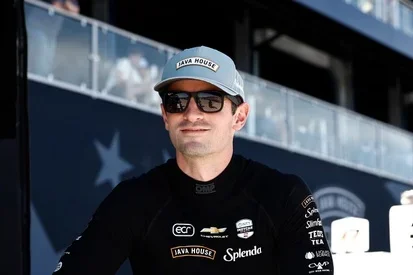

IndyCar and IndyCar Officiating have unveiled updates to their operating practices following Alexander Rossi’s on-track incident during Saturday’s race at the Indianapolis Motor Speedway road course. The adjustments aim to streamline the decision-making process for deploying a full course caution, prioritizing safety over competitive considerations.
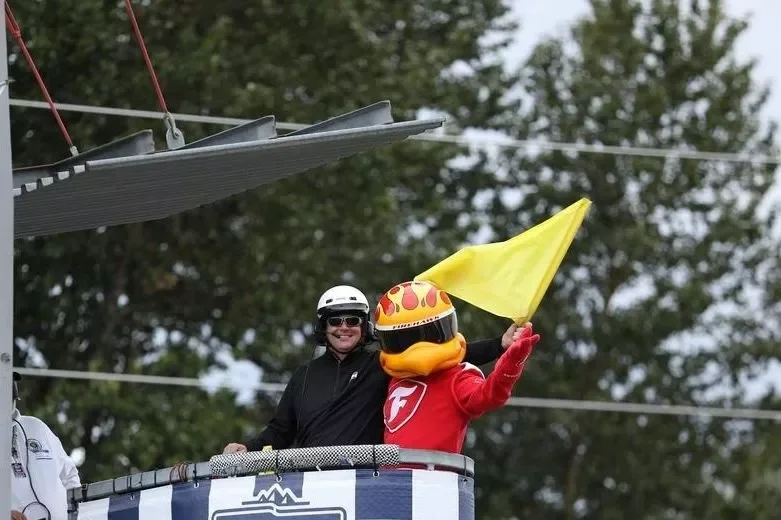
On Lap 21 of the 85-lap race, Rossi’s #20 Chevrolet for ECR experienced a mechanical issue—later hinted by the driver to be hybrid-related—and came to a stop on the right side of the front straightaway. Officials noted the car was “off the racing line” but in an area where cars often receive a tow and may go three- or four-wide. Course marshals followed standard flagging protocol, displaying a standing yellow at Marshal Panel 14 and a waving yellow at the start-finish line. The escalation to a full course yellow (FCY) occurred on Lap 22 as Rossi began exiting the car.
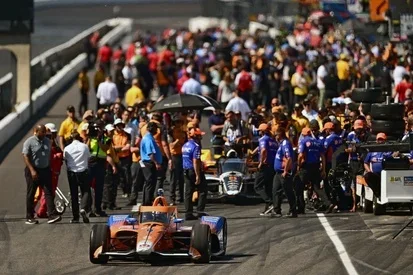
Previous protocol for moving from a local yellow to an FCY involved weighing factors such as driver egress, vehicle position, recovery vehicle access, safety team locations, laps remaining, and the timing of approaching traffic. It also considered pit windows and the running order of cars on track. Effective immediately, IndyCar Officiating will no longer factor in pit windows or running order when deciding to deploy a full course yellow. Local yellow procedures remain unchanged, with FCY initiation now based solely on driver status, vehicle position and condition, safety personnel readiness, recovery access, and the speed differential between affected cars and approaching traffic.
“The Lap 21 incident on Saturday made clear that there needs to be a cleaner standard for how race control moves from a local to a full course yellow,” said Raj Nair, chair of IndyCar Officiating’s Independent Officiating Board. “IndyCar Officiating, with IndyCar’s full support, has made this change to ensure that the only inputs to a full course yellow escalation are safety ones. Streamlining the assessment will also save time as competitive considerations are no longer a factor.”
IndyCar President Doug Boles, who also serves as president of the Indianapolis Motor Speedway, added: “The most important job in race control is to ensure the safety of our drivers, crews, safety workers and fans. Saturday highlighted that we must not waver from that central mission. The Independent Officiating Board, the new managing director of officiating, race director, and IndyCar are all in agreement. The metrics for initiating a full course yellow will now guarantee that whenever there is any risk to driver safety, race control will respond immediately.”